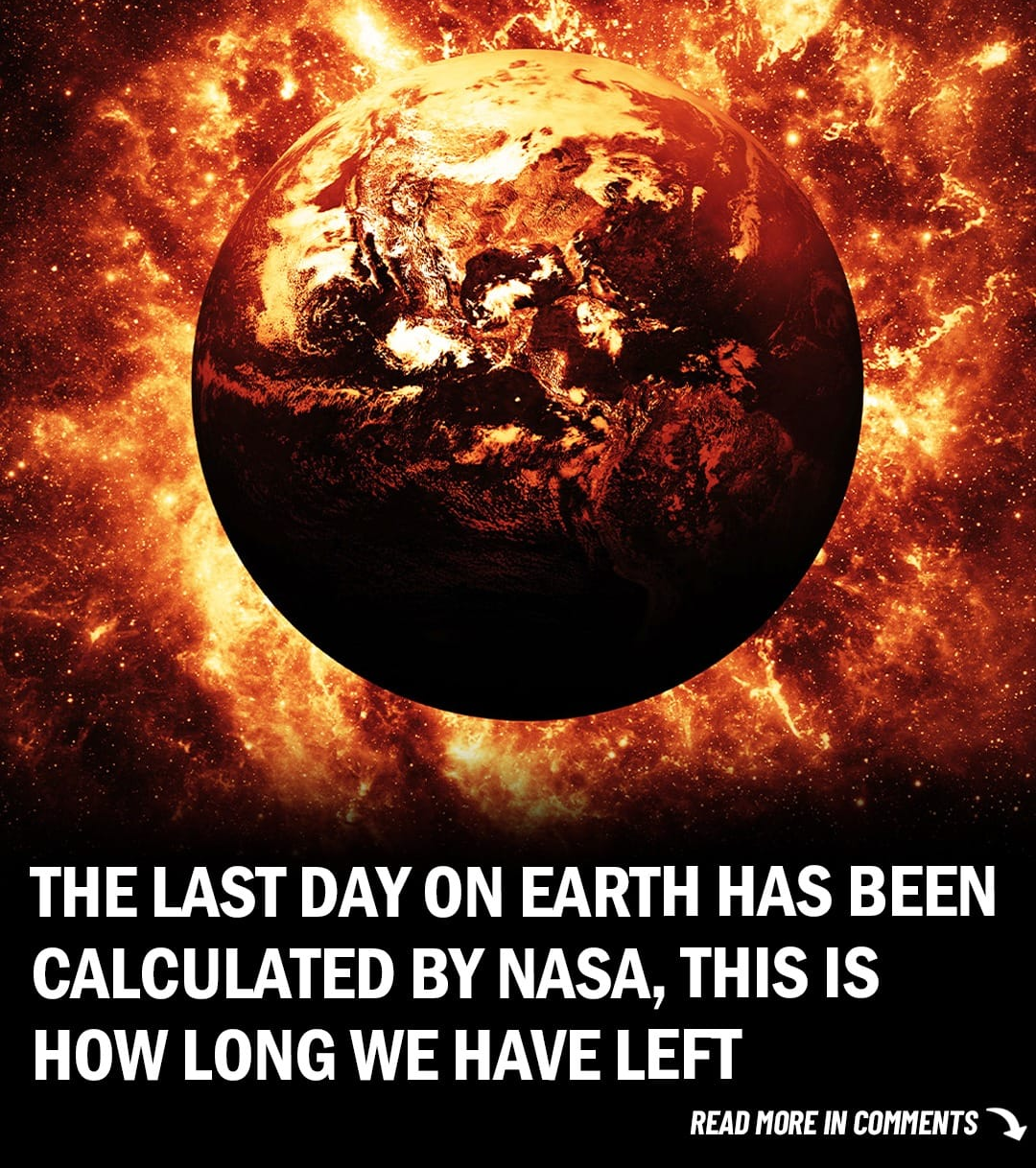
The end of life on Earth isn’t just a topic for science fiction anymore. NASA has used advanced astronomical studies to calculate the timeline for the eventual extinction of all life on our planet. While Earth still has billions of years left before it’s consumed by the Sun, the biosphere that sustains life has far less time. The grim reality is that life on Earth has a finite timeline, and NASA’s findings suggest that the countdown has already begun.
The Sun’s Slow Transformation

The Gradual Rise in Temperature

As the Sun continues to burn, it becomes slightly hotter and brighter each year. This increase in solar energy leads to a corresponding rise in Earth’s surface temperature. Over time, this will cause a cascade of environmental changes, including more intense heatwaves, prolonged droughts, and the eventual evaporation of our oceans. These changes are part of a feedback loop that will ultimately lead to the collapse of Earth’s ecosystems.
The Moist Runaway Greenhouse Effect

One of the most critical stages in Earth’s decline will be the onset of what NASA calls the “moist runaway greenhouse effect”. As the Sun gets brighter, more water will evaporate from the oceans, filling the atmosphere with water vapor, a potent greenhouse gas. This process will trap more heat, accelerating global warming and pushing Earth’s climate beyond the threshold that can support life. The once vibrant and life-sustaining planet will become a hot, barren world.
The End of the Biosphere

According to NASA’s calculations, life on Earth has about 1.5 billion years left. This may seem like a long time, but it is a blink of an eye in cosmic terms. Once the moist runaway greenhouse effect takes hold, Earth’s surface will become too hot to support life as we know it. The oceans will boil away, the atmosphere will be stripped of its moisture, and the last remnants of life will perish in the searing heat.2
The Final Days

In its final stages, Earth will resemble Venus, with surface temperatures soaring to unbearable levels. The Sun, now a red giant, will continue to expand, possibly engulfing the Earth in its outer layers. Even if the planet somehow escapes this fate, it will be a lifeless, charred rock orbiting a dying star. The end of life on Earth is an inevitable event, driven by the natural lifecycle of the Sun.
What This Means for Humanity

NASA’s prediction about the end of life on Earth serves as a stark reminder of the fragility of life in the universe. While the end is billions of years away, it underscores the importance of seeking out new frontiers for humanity, whether on Mars or beyond our solar system. As we continue to explore space, understanding the finite nature of our existence on Earth may drive us to push the boundaries of science and technology in the search for a new home.
Leave a Reply