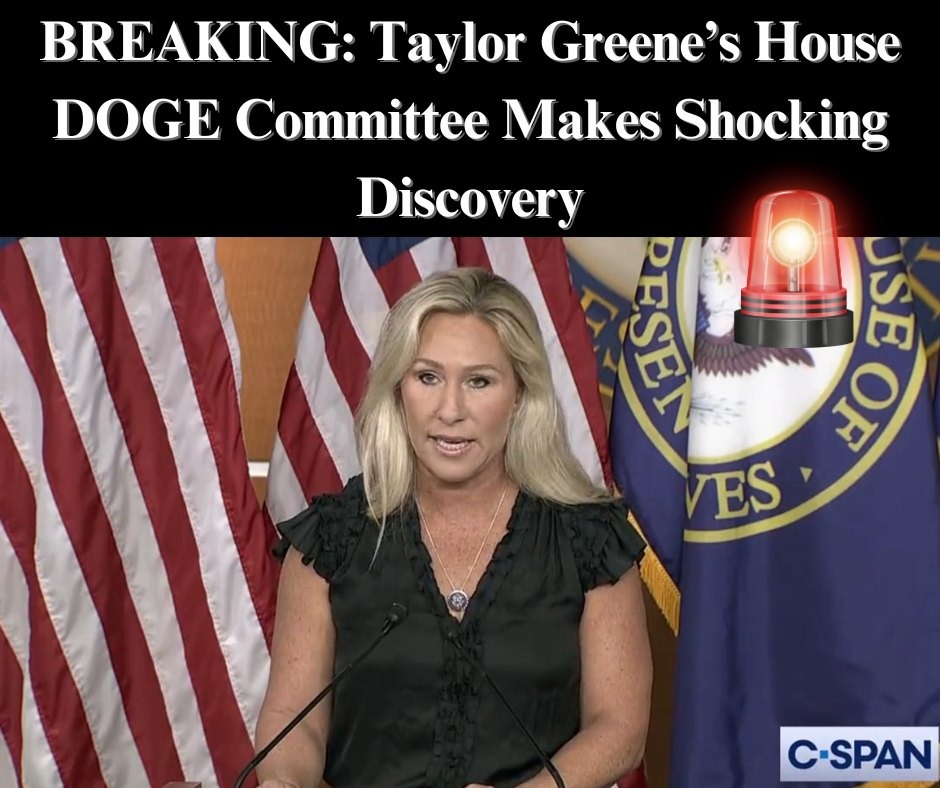
Representative Marjorie Taylor Greene’s Investigation of USAGM: A Comprehensive Analysis
In a move that has ignited debate among political observers, media watchdogs, and policy experts alike, Representative Marjorie Taylor Greene announced on Thursday that her subcommittee within the Department of Government Efficiency (DOGE) will launch an investigation into the U.S. Agency for Global Media (USAGM). Greene’s inquiry centers on allegations that USAGM has been plagued by “gross negligence” and “rampant cronyism,” ultimately undermining its mission as a neutral, taxpayer-funded media outlet. USAGM, which oversees influential international broadcasters such as Voice of America (VOA) and Radio Free Europe/Radio Liberty, was established to deliver independent, fact‑based news coverage around the globe. According to Greene, however, the agency has strayed far from its founding purpose.
This article provides an extensive analysis of the controversy surrounding USAGM. We begin by reviewing the role and intended mission of the agency, then examine the Trump‑era executive order that led to a sweeping reorganization of several federal entities and set the stage for today’s debate. Next, we delve into Greene’s detailed allegations—highlighting claims of mismanagement, cronyism, and wasteful spending while focusing on controversial programs such as the Open Technology Fund (OTF) and settlement agreements related to internal investigations. Finally, we discuss the broader ramifications for domestic policy, U.S. public diplomacy, and national security while offering strategic recommendations for enhancing government oversight and transparency.
I. Background: The Role and Mission of USAGM
A. The Founding Purpose of USAGM
The U.S. Agency for Global Media (USAGM) is a federal agency tasked with overseeing some of America’s most prominent international broadcasters. Its key outlets include Voice of America (VOA), Radio Free Europe/Radio Liberty, and other related public diplomacy platforms. Established by Congress as an independent, nonpartisan organization, USAGM is funded with taxpayer dollars and charged with the mission of providing unbiased, factual news to global audiences.
The agency was created with three core principles:
-
-
Transparency: USAGM is expected to operate openly, with clear accountability for how taxpayer money is spent.
-
-
Journalistic Integrity: Its programming is meant to be free from political influence, delivering news based on facts and standard journalistic ethics.
- Impartiality: As a tool for U.S. public diplomacy, USAGM must avoid partisan bias, thereby maintaining credibility both domestically and internationally.
-
B. USAGM’s Evolving Role in the Digital Age
In a rapidly changing digital landscape, USAGM’s role is increasingly significant. As countries grapple with disinformation campaigns and attempts to manipulate narratives, independent and reliable news sources are more crucial than ever. International broadcasters like VOA play a key role in promoting democratic values and countering hostile propaganda in regions where free press remains under threat.
For USAGM to fulfill this mission, the agency must maintain rigorous management practices, safeguard sensitive information, and avoid any appearance of partisanship. Its success is not measured only in ratings or global reach but also in how effectively it can promote U.S. values while fostering trust among international audiences.
II. Trump’s Executive Order and Its Impact on Federal Agencies
A. The Executive Order: Policy and Controversy
In early 2017, less than two weeks into his presidency, Donald Trump signed a highly contentious executive order that suspended the entry of refugees and visa holders from seven predominantly Muslim countries for a period of 90 days. The administration presented this measure as a necessary step to protect the nation from potential terrorist threats. However, critics argued that the order was discriminatory, aimed at a specific religious group, and that it fueled anti‑Muslim sentiment. The policy sparked a broad and heated national debate over immigration, civil rights, and the appropriate use of executive power.
B. The Order’s Ripple Effect on Federal Bureaucracy
Beyond its immediate impact on immigration policy, the executive order served as a catalyst for broader governmental reforms. The Trump administration targeted several federal agencies—USAGM among them—to streamline operations and eliminate what it deemed unnecessary functions. Proponents of the order argued that enormous sums of taxpayer dollars were being wasted on inefficiencies and that a radical reorganization of the federal government would help to restore fiscal responsibility and national security.
-
The mandate was simple: reduce bureaucracy by eliminating non‑statutory functions and minimize statutory ones to only what was legally required. In theory, these measures would lead to leaner, more efficient agencies. However, critics warned that such drastic measures risked undermining vital services. As agencies that served critical public functions underwent sweeping changes, questions arose about their ability to maintain quality and independence—issues that directly affect entities like USAGM.
C. The Long-Term Consequences of Policy Overhaul
The executive order’s reorganization of federal agencies was not without controversy. While intended to cut waste, it also disrupted longstanding institutions and created uncertainty within government structures. For USAGM, which plays a key role in international news dissemination, any attempt to minimize its functions or cut its budget risks impairing its ability to provide impartial, fact‑based reporting. The tensions between efficiency measures and the need for robust, independent public diplomacy have since become a persistent theme in discussions about the agency’s performance.
III. Greene’s Investigation: Allegations and Rationale
A. The Announcement: A Bold Statement by Rep. Greene
In a televised announcement that quickly made headlines, Representative Marjorie Taylor Greene, as chairwoman of her subcommittee within DOGE, declared that an investigation into USAGM would commence immediately. Greene accused the agency of being riddled with “gross negligence” and “rampant cronyism,” alleging that these issues had compromised its mission as an independent, taxpayer‑funded media outlet.
Her language was forceful and unambiguous—a call to action for increased accountability in a federal agency that, according to Greene, had long ceased to operate within the bounds of responsible management. By launching this probe, Greene aims to expose alleged inefficiencies, improper spending, and internal practices that may pose a threat to national security and undermine U.S. public diplomacy.
B. Detailed Allegations: Mismanagement, Waste, and Cronyism
Representative Greene’s investigation focuses on several critical areas of concern:
1. Mismanagement and Wasteful Spending
Greene alleges that USAGM has been poorly managed from a fiscal and operational standpoint. The agency is accused of allocating funds in opaque ways that lack clear accountability. Critics of USAGM within the investigation argue that large sums of taxpayer dollars have been funneled into inefficient or redundant operations, thereby wasting resources that could be better used to support independent journalism and counter disinformation.
2. Rampant Cronyism
At the heart of the investigation is the claim that USAGM’s decision‑making processes have been compromised by cronyism. Greene asserts that contracts and grants—especially those linked to the Open Technology Fund (OTF)—have been awarded not based on merit or competitive bidding but through personal connections and favoritism. This system, she contends, allows political allies and insiders to benefit at the expense of fair competition, thus undermining the integrity of the agency’s operations.
-
3. National Security Concerns
Perhaps most alarmingly, Greene’s inquiry suggests that these managerial failings and instances of cronyism are not purely matters of fiscal waste; they are also a direct threat to national security. By compromising the efficient operation of USAGM, Greene argues, the agency risks leaking sensitive information and weakening its ability to disseminate unbiased news—a core component of U.S. public diplomacy that is critical in countering hostile propaganda globally.
C. Focus on the Open Technology Fund and Settlement Agreements
A central element in Greene’s investigation is the administration of the Open Technology Fund, which is designed to support innovative, open‑source technologies that promote transparency. Greene alleges that funds under OTF have been misallocated through contracts that bypass traditional competitive processes, thus serving the interests of political cronies rather than the public good.
Additionally, Greene is scrutinizing settlement agreements related to internal investigations—specifically, those tied to the McGuireWoods report, which documented whistleblower claims of mismanagement within USAGM. Claims that officials previously terminated for mismanagement are being rehired further raise concerns about accountability and the perpetuation of internal corruption.
-
IV. National Security Implications
A. Security Protocol Lapses
USAGM’s efficacy depends critically on its ability to safeguard sensitive information and operate securely. Greene’s investigation raises the alarm that, over recent years, there have been significant lapses in security protocols at USAGM. Multiple sources indicate that these weaknesses may have allowed unauthorized access to classified or sensitive data, thereby exposing the United States to potential threats from hostile foreign actors.
The absence of rigorous security measures not only puts information at risk but also undermines the overall credibility of the agency. For an organization tasked with countering propaganda and providing reliable news to international audiences, maintaining strict security protocols is paramount. Any breach in this regard could have dire consequences for national security.
B. Cronyism as a Threat to National Security
The allegations of cronyism extend beyond fiscal mismanagement and enter the realm of national security. When contracts and decisions are made based on personal connections rather than qualifications, there is an inherent risk that individuals lacking the necessary expertise will be placed in positions of significant responsibility. Greene warns that such practices can lead to a situation where sensitive operations are handled by those more interested in personal gain than in upholding public trust.
-
In this context, the misallocation of funds through programs like the Open Technology Fund could divert resources away from critical initiatives aimed at countering disinformation and bolstering U.S. public diplomacy. By enabling unqualified or politically motivated personnel to shape the agency’s priorities, cronyism poses a direct challenge to U.S. national security interests.
C. Impact on U.S. Public Diplomacy
USAGM serves as one of the nation’s foremost instruments of public diplomacy. Its broadcasters—VOA, Radio Free Europe/Radio Liberty, and others—are tasked with delivering independent, factual news to audiences around the world. In an era where information warfare and digital propaganda are increasingly prevalent, the integrity and impartiality of these services are vital.
Greene’s investigation highlights how mismanagement and allegations of cronyism can undermine USAGM’s credibility. If foreign audiences perceive the agency as being compromised by internal corruption, the United States’ ability to project democratic values and counter hostile narratives could be weakened. This erosion of soft power would have far‑reaching implications not only for U.S. international standing but also for national security.
-
V. Political and Administrative Context
A. Trump’s Executive Order and the Broader Critique of Bureaucracy
The executive order signed by President Trump that targeted various federal agencies, including USAGM, was part of his broader agenda to reduce government spending and eliminate waste. Trump’s administration argued that many government entities had become inefficient and that billions of dollars were being squandered. The order was intended to strip non‑essential functions from these agencies so that taxpayer dollars could be used more effectively.
Supporters of the order viewed it as a necessary overhaul, one that would rein in bureaucratic excess and restore accountability. Critics, however, warned that such sweeping measures could have unintended consequences. In the case of USAGM, the fear was that the emphasis on cost‑cutting could undermine the agency’s capacity to perform its core mission—providing unbiased news in support of U.S. public diplomacy.
B. The Mandate of the DOGE Subcommittee
Representative Marjorie Taylor Greene, as chairwoman of her subcommittee within the Department of Government Efficiency (DOGE), has made it her mission to enforce stringent accountability across federal agencies. Greene’s investigation into USAGM is part of a larger effort to ensure that taxpayer dollars are not wasted and that federal operations adhere to high standards of efficiency and transparency.
-
Her decision to launch the investigation is rooted in a long‑standing conservative critique of government mismanagement and cronyism. Greene claims that USAGM has become a hotbed of inefficiency and that its internal practices are not only a financial burden but also a potential threat to national security. This inquiry is intended to shine a light on these alleged problems and to force corrective measures, regardless of the political cost.
C. The Role of Partisanship in Oversight
As with many high‑profile investigations, Greene’s probe into USAGM is inherently partisan. Her allegations have been embraced by conservatives as evidence of a corrupt, bloated government, while Democrats and centrist observers view the investigation with skepticism—labeling it as politically motivated witch‑hunting. This partisan framing complicates the debate, with each side accusing the other of distorting the facts for electoral gain.
With the 2024 election cycle approaching, the investigation is poised to become a key talking point. If substantial mismanagement or cronyism is uncovered, it could be used to mobilize conservative voters and undermine public confidence in the current administration’s oversight practices. Conversely, if the investigation is perceived as a partisan stunt, it could backfire, leading to calls for more balanced, non‑partisan oversight.
-
VI. Whistleblower Testimonies and Independent Investigations
A. The McGuireWoods Report: Corroborating Whistleblower Claims
A central element underpinning Greene’s allegations is an independent report prepared by the law firm McGuireWoods. Released in 2020, the McGuireWoods report is based on whistleblower testimonies that detail significant mismanagement within USAGM. Insiders who spoke under condition of anonymity recounted instances of gross negligence, intentional defiance of security protocols, and pervasive cronyism in contract awards.
The report has lent credibility to the allegations, providing documented instances where internal procedures were ignored or bypassed. For example, whistleblowers claimed that contracts tied to the Open Technology Fund were awarded not through competitive processes but through channels favoring insiders with political connections. Such practices, if verified, not only waste taxpayer dollars but also weaken the agency’s operational integrity.
B. Whistleblower Protections and the Need for Transparency
The McGuireWoods report underscores a critical issue: whistleblowers play an indispensable role in maintaining accountability within government agencies. However, many whistleblowers face significant personal and professional risks when they come forward. Legal experts argue that strong protections are essential to encourage insiders to report wrongdoing without fear of retaliation.
-
Greene’s investigation calls for greater transparency, including the full disclosure of grant agreements, settlement documents, and personnel files related to the internal misconduct allegations. By ensuring that all relevant documents are available for independent review, policymakers can better assess the true extent of the problems within USAGM.
C. The Controversy over Rehiring Practices
Another focal point of the investigation is the rehiring of officials previously dismissed for mismanagement. Greene alleges that these individuals, whose incompetence had been publicly acknowledged during the Trump administration, were reinstated by the Biden administration without adequate oversight. Such moves, she contends, send a dangerous signal to insiders—that accountability is optional and that mismanagement may be tolerated if it serves political expediency.
This issue is particularly sensitive because it touches on the heart of administrative reform. For many conservatives, the failure to hold discredited officials accountable is emblematic of systemic corruption. For others, it is seen as part of the normal ebb and flow of bureaucratic personnel changes. Regardless, the controversy over rehiring practices is a critical piece of Greene’s broader argument that USAGM is fundamentally broken.
-
VII. National Security Implications
A. Security Lapses and Data Vulnerabilities
USAGM’s mission to deliver impartial news and promote democratic values globally hinges on its ability to protect sensitive information. Allegations that the agency has suffered from significant security lapses are therefore particularly alarming. Reports from oversight bodies such as the Office of Personnel Management (OPM) and the Office of the Director of National Intelligence (ODNI) suggest that there have been instances where USAGM did not enforce strict security protocols, thereby exposing the agency to potential cyberattacks or unauthorized data access.
If compromised, such vulnerabilities could allow hostile actors to infiltrate the agency’s systems, jeopardizing national security. More broadly, failures in cybersecurity at USAGM would undermine the public’s trust in the United States’ ability to safeguard not only its classified information but also the soft power that comes from reliable, independent news reporting.
B. Cronyism’s Role in Undermining Security
Beyond mere inefficiencies, the allegations of cronyism have dire national security implications. When contracts and decision‑making processes are influenced by personal connections rather than expertise, unqualified individuals may be placed in positions that handle critical, sensitive tasks. Greene asserts that this practice compromises the integrity of USAGM and leaves the agency vulnerable to missteps that could have severe consequences for national security and public diplomacy.
-
When funding meant for cutting‑edge security measures is diverted to favoritism-based contracts, the quality of U.S. public broadcasting can suffer. At the same time, such practices may hinder the agency’s ability to counter foreign disinformation effectively. In an era marked by sophisticated global cyber warfare and propaganda campaigns, any weakness in the operational security of a major public diplomacy tool is unacceptable.
C. Impact on U.S. Public Diplomacy
USAGM is a linchpin in U.S. public diplomacy. Its broadcast services—such as VOA and Radio Free Europe/Radio Liberty—are designed to present unvarnished, objective news to international audiences and to promote American values in countries where press freedom is restricted. However, if mismanagement and cronyism erode the credibility of these outlets, the United States risks losing an essential tool for shaping global public opinion.
The erosion of trust in USAGM would have a cascading effect on the nation’s soft power. In a world where information is a critical asset and public diplomacy plays a significant role in international relations, the integrity of federal broadcasting agencies is paramount. Greene’s investigation, therefore, carries broader implications for the role of U.S. public diplomacy in a highly contested global media environment.
-
VIII. Political and Administrative Context
A. Trump Administration’s Critique of Bureaucratic Waste
The executive order that sparked the reorganization of federal agencies, including USAGM, was emblematic of President Trump’s broader critique of the federal bureaucracy. With a strong focus on reducing wasteful spending and streamlining government operations, the Trump administration argued that agencies had become bloated and inefficient—draining resources that could be better used elsewhere.
Supporters of the executive order maintain that such measures were necessary to rein in excess and to reassert fiscal responsibility. From this perspective, reducing government waste is not only an economic imperative but also a means of mitigating national security risks that stem from mismanagement. Greene’s investigation aligns with this narrative, suggesting that unchecked inefficiencies and cronyism have created vulnerabilities that must be addressed through comprehensive oversight.
B. The Mandate of the DOGE Subcommittee
As the chairwoman of her subcommittee within the Department of Government Efficiency, Representative Marjorie Taylor Greene is tasked with ensuring that federal agencies operate efficiently, transparently, and in accordance with the law. Her decision to launch an investigation into USAGM is driven by a commitment to accountability—a commitment that resonates with a significant portion of the electorate concerned about government mismanagement and wasteful spending.
-
The DOGE subcommittee’s mandate is clear: scrutinize agencies to guarantee that taxpayer dollars are spent responsibly and that operations adhere to strict standards of transparency. Greene’s aggressive rhetoric—characterizing USAGM as a repository of “gross negligence” and “rampant cronyism”—reflects her desire to use this investigative power to force reform and secure national resources for their intended purposes.
C. Partisan Debates and the Role of Political Rhetoric
Inevitably, any investigation of this nature is bound to become highly partisan. Greene’s investigation has been embraced by conservative critics who argue that the current administration is complicit in a system of corruption and inefficiency. Conversely, Democrats and centrist commentators see the inquiry as a politically motivated maneuver designed to score points ahead of the 2024 election cycle.
This deep partisan divide is further complicated by intense media scrutiny. Politicians, pundits, and watchdog groups all contribute to a rapidly evolving dialogue that can obscure the substantive policy issues at hand. Ultimately, however, the underlying questions—about mismanagement, national security, and the effective use of taxpayer dollars—transcend partisan lines and demand a balanced, objective investigation.
-
IX. Whistleblower Testimonies and Independent Oversight
A. Protecting Insider Sources
Central to the allegations against USAGM are the testimonies from whistleblowers who have raised concerns about internal corruption. These individuals, who have reported their findings under conditions of anonymity, paint a picture of systemic inefficiencies and deliberate bypassing of security protocols. Protecting these sources is crucial, as their testimonies are often the only evidence of misconduct within large federal agencies. Strengthening whistleblower protections ensures that insiders can report wrongdoing without fear of retaliation, which in turn fosters a culture of accountability across government institutions.
B. The Significance of the McGuireWoods Report
One of the pivotal pieces of evidence used to support Greene’s allegations is the McGuireWoods report. Released in 2020 by the law firm renowned for its expertise in governmental and regulatory matters, the report outlines a series of incidents in which USAGM officials were accused of gross negligence, security protocol violations, and favoritism in contract awards. The detailed accounts provided by whistleblowers form a core part of the investigation, suggesting that these issues are not isolated incidents but rather indicative of a systemic problem within the agency.
C. The Issue of Rehiring Discredited Officials
Another controversial area in Greene’s investigation concerns the rehiring of officials who were previously dismissed for mismanagement. Greene argues that the decision by the current administration to reinstate such personnel demonstrates a failure to learn from past mistakes. If individuals who had been fired for poor performance are allowed back into positions of influence without proper scrutiny, it raises serious questions about the commitment to reform and accountability. Such practices, if widespread, could embolden further mismanagement and create a culture where poor performance is tolerated in exchange for political expediency.
-
X. National Security Implications and the Integrity of Public Diplomacy
A. Ensuring the Protection of Sensitive Information
USAGM’s operations rely on its ability to safeguard sensitive information—information that, if compromised, could have serious ramifications for national security. Greene’s investigation suggests that mismanagement and cronyism have led to lapses in security protocols, thereby increasing the risk of unauthorized access to classified data. In today’s high‑tech, interconnected world, even minor security breaches can have major consequences. Strengthening cybersecurity measures and ensuring strict adherence to security protocols are imperative steps in protecting both national security and the integrity of USAGM’s mission.
B. The Toll on U.S. Public Diplomacy and Soft Power
USAGM is a critical tool for U.S. public diplomacy. Through its international broadcasters, the agency serves as a conduit for promoting American democratic values and countering disinformation abroad. However, if USAGM is perceived as being riddled with internal corruption and inefficiencies, its credibility on the global stage may be severely undermined. International audiences rely on USAGM for reliable, unbiased news, and any erosion of that trust could diminish the United States’ soft power. Greene’s allegations, if substantiated, could signal that the agency is no longer fulfilling its vital role in advancing U.S. public diplomacy.
C. The Broader Narrative: Waste, Inefficiency, and Security
The intersection of wasteful spending, bureaucratic inefficiency, and national security risk is a recurring theme in Greene’s critique. The Trump-era executive order aimed to rid the government of excess and mismanagement, and many of the measures enacted were intended to prevent the misuse of taxpayer dollars. By highlighting these issues within USAGM, Greene is framing the investigation as not only a fiscal matter but as a critical component of national security. In an era where adversaries are increasingly adept at exploiting vulnerabilities, ensuring that every federal agency operates efficiently and securely is paramount.
-
XI. Reactions from the White House and Political Leaders
A. The Trump Administration’s Legacy
The executive order that targeted agencies such as USAGM was part of the Trump administration’s broader effort to reduce government waste and improve efficiency. While Trump is no longer in office, his policies continue to influence current debates about federal oversight. Supporters argue that streamlining government operations is necessary to reclaim taxpayer dollars and safeguard national security, while critics contend that such measures can sometimes strip essential services of their capacity to function effectively. Greene’s investigation taps into this enduring debate, serving as an extension of Trump’s own criticisms of bureaucratic inefficiency.
B. Partisan Perspectives and Political Messaging
Representative Marjorie Taylor Greene’s probe into USAGM is deeply rooted in partisan ideology. Conservatives have embraced the investigation as evidence that government agencies are rife with corruption, and they point to the alleged mismanagement and cronyism as proof of systemic failure. For many on the right, Greene’s allegations bolster a narrative of governmental waste and the misuse of power that resonates strongly with voters frustrated by what they perceive as excessive federal spending.
In contrast, Democrats and centrist voices view the investigation with caution, suggesting that it may be more about scoring partisan points than about genuine reform. This divide over the motives and implications of the probe reflects the broader polarization in American politics, where every action by federal officials is scrutinized through a partisan lens. Nonetheless, the significance of the issues raised—if proven—transcends political ideology and speaks to the core principles of accountability and transparency.
-
C. The Implications for the 2024 Election Cycle
With the 2024 election cycle fast approaching, the stakes of Greene’s investigation could not be higher. Any substantial evidence of corruption or mismanagement uncovered at USAGM would likely be leveraged by political opponents as a rallying point. For Republicans, the investigation could serve as a critical issue around which to rally voters who are disenchanted with government inefficiency. On the other hand, Democrats risk appearing defensive if they are unable to address legitimate concerns about bureaucratic waste while remaining committed to protecting essential public services.
The way this investigation is framed—and the public’s perception of its findings—could have lasting implications on how government oversight is conducted and how taxpayers view federal accountability. In a highly charged political environment, strategic messaging by both sides will be crucial in determining whether the investigation serves as a catalyst for reform or merely as a partisan talking point.
XII. Strategic Recommendations for Enhancing Oversight and Accountability
In light of the serious allegations raised by Greene’s investigation, several strategic recommendations emerge. These proposals aim to address the systemic issues within USAGM and ensure that federal agencies operate with the highest standards of efficiency and transparency.
A. For Federal Agencies and Oversight Bodies
1. Implement Regular, Independent Audits
USAGM and similar agencies should be subject to comprehensive, independent audits on a regular basis. These audits should cover financial practices, security protocols, and overall operational effectiveness. The audit findings must be made publicly available to promote transparency and allow for informed public scrutiny.2. Strengthen Whistleblower Protections
Robust legal safeguards should be enacted to ensure that individuals who report internal corruption or mismanagement are protected from retaliation. This includes establishing confidential reporting channels and providing legal and financial support for whistleblowers. A secure environment for disclosure is critical for uncovering and addressing misconduct.3. Enforce Transparent Contracting Processes
All contracts and grant agreements—especially those administered through the Open Technology Fund—should be awarded based on merit through competitive bidding. Mandatory public disclosure of contracts (with necessary redactions) would minimize cronyism and ensure that taxpayer dollars are spent responsibly. -
B. For the Executive Branch and Policymakers
1. Review and Reform Personnel Practices
The executive branch should reevaluate hiring and rehiring policies within federal agencies to prevent the reinstatement of individuals with histories of mismanagement or unethical conduct. Emphasizing merit-based recruitment and implementing strict performance evaluations are essential measures.2. Enhance Interagency Coordination
Oversight bodies such as the Office of Personnel Management (OPM) and the Office of the Director of National Intelligence (ODNI) should collaborate to develop unified strategies for identifying and resolving inefficiencies and security lapses. Sharing best practices among agencies can create a more cohesive and effective oversight framework.3. Mandate Transparent Communication of Reforms
It is vital that any reforms or policy changes are communicated openly to the public via regular briefings, detailed reports, and proactive media engagement. Transparent communication will play a key role in rebuilding public trust in federal agencies.C. For Media Organizations and Public Engagement
1. Establish Rigorous, Balanced Reporting Standards
Media outlets must adhere to strict editorial guidelines when covering sensitive topics such as government oversight. Objective, fact‑based reporting can help maintain public trust and avoid exacerbating partisan tensions. Balanced coverage is crucial for fostering informed debate.2. Promote Public Education and Media Literacy
Government agencies and media organizations should collaborate on initiatives to improve media literacy among the general public. Educational programs that help citizens critically evaluate news sources and understand the complexities of government oversight will empower voters to make informed decisions.3. Foster Constructive Public Dialogue
Platforms for open and respectful dialogue between differing political perspectives should be promoted. Organizing forums, debates, and public hearings can encourage informed discussions about policy reform and underscore the importance of accountability in government. -
D. For Legislative and Regulatory Agencies
1. Enact Stronger Legislative Oversight Measures
Congress should consider strengthening laws governing federal agency accountability, including updates to the Government Performance and Results Act. New legislation could impose stricter oversight requirements and clarify the legal definitions of negligence and cronyism.2. Establish Bipartisan Oversight Committees
Creating or reinforcing bipartisan committees to monitor agencies like USAGM can help ensure that oversight is conducted free of partisan bias. Such committees should be granted the authority to investigate allegations of corruption and hold agencies accountable through periodic reviews.3. Promote International Collaboration on Oversight Standards
Engaging with international partners to adopt global best practices in government accountability can provide valuable insights and benchmarking opportunities. Multilateral oversight frameworks may offer strategies for reducing bureaucratic inefficiency and enhancing transparency across public institutions.XIII. Historical Context and International Comparisons
A. Lessons from Past American Reforms
American history is replete with examples of governmental reform following periods of public outcry. In the 1970s, revelations of widespread corruption led to the establishment of independent oversight bodies and significant reforms in government transparency. Similarly, early‑2000s efforts to modernize federal agencies resulted in measurable improvements in fiscal responsibility and service delivery. These historical precedents demonstrate that meaningful reform is possible when transparency, accountability, and independent oversight are prioritized.
The current investigation into USAGM provides an opportunity to draw on these lessons. By adopting strategies that have proven successful in the past—such as rigorous independent audits and robust whistleblower protections—policymakers can design reforms that address systemic issues and restore public confidence.
B. International Models of Efficiency and Transparency
Many countries around the world have implemented innovative approaches to enhance public sector accountability. For example, several European nations have established comprehensive public auditing systems that are independent of political influence. These systems have successfully reduced bureaucratic corruption through strict adherence to merit‑based hiring practices, transparent contracting processes, and continuous performance evaluations.
The United States could benefit from studying these international models and adapting similar practices for USAGM. By embracing policies such as full public disclosure of contracts, competitive bidding processes, and stringent oversight, the U.S. can work toward a more efficient and accountable public broadcasting system.
C. Global Public Diplomacy and the U.S. Image
USAGM is an essential instrument of U.S. public diplomacy, tasked with disseminating unbiased news and promoting American democratic values worldwide. In the current global climate—characterized by rapid digital information flows, competing narratives, and increasing disinformation—the integrity of USAGM is of paramount importance. Any perception that the agency is compromised by internal corruption or mismanagement can weaken U.S. soft power and diminish its influence on the global stage.
As the United States seeks to reaffirm its international credibility, ensuring that USAGM operates with maximum transparency and efficiency is critical. Lessons from international best practices and multilateral oversight can help in shaping reforms that protect the agency’s mission, thereby enhancing its role as a global public diplomacy tool.
XIV. Broader Political Implications
A. Partisan Divides in Oversight and Reform
Representative Greene’s investigation is inherently partisan. Her outspoken allegations resonate deeply with conservative voters who are critical of federal bureaucracy and wasteful spending. For many on the right, the mismanagement at USAGM is a vivid example of the failures of the current system—failures that must be exposed and remedied at all costs.
However, this partisan framing also fuels division. Democrats and centrist commentators warn that the investigation may be more about political point‑scoring than genuine reform. This division over the merits of the inquiry reflects broader ideological battles in American politics, where issues of government accountability are often interpreted through a partisan lens.
The way in which this investigation is communicated and understood will have significant ramifications as the 2024 election cycle approaches. Should substantive evidence of mismanagement emerge, it could bolster conservative arguments for sweeping governmental reforms. Conversely, if the investigation is perceived as an exercise in partisanship, it may further entrench existing divisions and complicate efforts to pursue bipartisan reform.
-
B. Strategic Messaging and Electoral Considerations
As the investigation unfolds, political strategists on both sides are closely watching the narrative. For Republicans, Greene’s allegations offer a potent tool to criticize the current administration’s handling of taxpayer dollars and to argue that the federal government has lost its focus on accountability and security. Effective strategic messaging on these issues could resonate strongly with voters who are frustrated by bureaucratic inefficiency and internal corruption.
For Democrats, the challenge is to address these concerns without conceding to a narrative that alienates moderate voters. Emphasizing a commitment to modern, transparent oversight and fiscal responsibility—while distancing themselves from partisan rhetoric—will be essential for crafting a message that appeals to a broad spectrum of the electorate.
Ultimately, the outcome of this investigation and the manner in which its findings are presented will contribute significantly to the political narrative in the coming years. Both sides must work to ensure that discussions about government oversight remain focused on substantive policy challenges rather than devolving into partisan point‑scoring.
-
XIX. The Role of Media in Oversight and Accountability
A. Balanced and Transparent Reporting
Media organizations are essential players in the oversight ecosystem. Given that USAGM is funded by taxpayers, its operations must be subject to rigorous public scrutiny. Journalistic integrity and balanced reporting are critical for informing the public without inflaming partisan divisions. Reporters must adhere to factual, well‑contextualized coverage, ensuring that complex investigations are communicated in a clear and objective manner.
B. Enhancing Public Access to Information
Transparency is the bedrock of accountability. The investigation into USAGM underscores the necessity for government agencies to disclose key documents—including contracts, settlement agreements, and internal reports. Media outlets, in partnership with oversight organizations, should help ensure that such information is readily available to the public. Open access to these documents allows citizens and policymakers to scrutinize government operations and hold officials accountable.
C. Promoting Media Literacy
Improving media literacy among the public is a long‑term strategy for enhancing democratic oversight. Educational initiatives that help citizens critically assess news sources and understand the complexities of government oversight contribute to a more informed electorate. When voters can differentiate between partisan rhetoric and factual reporting, they are better equipped to engage in constructive political discourse and advocate for meaningful reforms.
Leave a Reply